Engineering Heterogeneity at Scale
As AI exposes the limits of traditional SoC architectures, the semiconductor industry is turning to heterogeneous integration, forcing changes in manufacturing, design tools, and system architecture.
By Pat Brans, EE Times | July 1, 2026
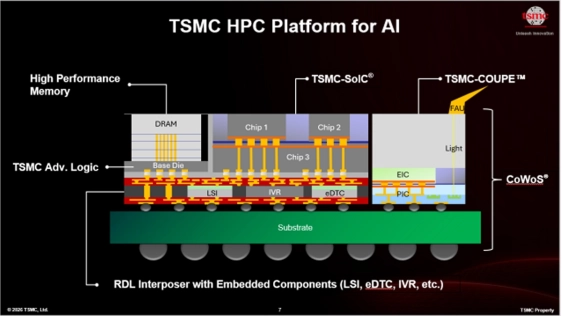
The semiconductor industry has advanced for several decades by widening the same highway. Shrink the transistor, add more of them to a chip, and systems become faster, smaller, and more efficient. But AI is now turning that highway into a sprawling transportation network.
AI differs from previous computing workloads because it simultaneously increases demand for compute, memory bandwidth, interconnect capacity, and power. Solving one bottleneck often exposes another, forcing engineers to optimize entire systems rather than individual components.
Data needs to move continuously between processors, memory stacks, photonic interconnects, power-delivery circuits, and cooling systems—often across multiple layers of silicon. The challenge is no longer simply building faster transistors. It’s orchestrating the movement of data, power, and heat across increasingly complex systems.
To read the full article, click here
Related Chiplet
- Optical Chiplet
- Reverse Gearbox Chiplet
- FlexGen Multi-Die Smart Network-on-Chip (NoC) IP
- Ncore Multi-Die Interconnect IP
- Integrated voltage regulator (IVR) chiplet
Related News
- Advanced Packaging Moving At Breakneck Pace
- Baya Systems Expands Bengaluru Engineering Hub to Scale AI, Automotive and HPC Innovation
- Menta exhibits at Chiplet Summit and presents its new scalable chiplet platform, MOSAICS-LP
- Arafin conducting research aimed at securing chiplet-based semiconductor manufacturing from untrusted supply chains
Latest News
- Tenstorrent Releases Open Source Beta of the Open Chiplet Atlas® (OCA) Harness
- Building Out Advanced Packaging Portfolio, JCET Delivers Steady Revenue Growth and Improved Profitability in Q3 YTD 2026
- Egis Group and SiPearl Sign Strategic Cooperation and Investment Agreements to Expand Opportunities on a Global Scale
- Unigen Expands AI Module and Server Compute Collaboration to EdgeCortix RAIDEN Platform
- Amkor Technology and NVIDIA Advance Strategic Partnership for AI Infrastructure