Are Chiplets Enough to Save Moore's Law?
By Steve Leibson, EETimes (June 2, 2023)
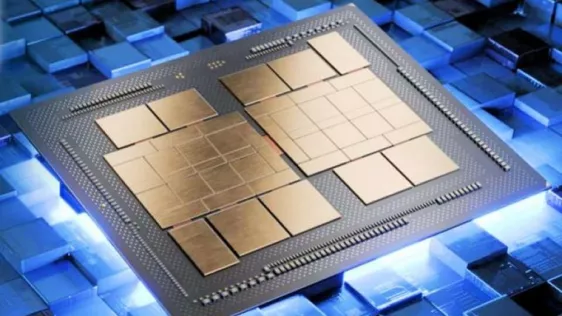
During a press conference at Computex this week in Taiwan, Nvidia CEO Jensen Huang and MediaTek CEO Rick Tsai announced that Nvidia would be supplying GPU chiplets to MediaTek to be incorporated into a yet-to-be-designed system-on-chip (SoC) for in-cabin automotive applications along with Nvidia AI and graphics IP.
Chiplets are not new to Nvidia. This announcement also adds a bit more validation for chiplets as a concept—one that many semiconductor makers are counting on to help keep Moore’s Law alive for the next several years.
The idea behind chiplets is hardly a new concept. The industry has been making multi-chip modules for decades: Mostek, for example, put two MK4116 16-Kbit DRAM chips in a dual-cavity ceramic package to create the MK4332D 32Kbit DRAM back in 1979. Intel also mated a CPU chip and an SRAM chip in the Pentium Pro, introduced in late 1995. These multichip modules (MCMs) allowed Mostek and Intel to transcend the limitations of their semiconductor processes to create packaged devices that were “more than Moore.
To read the full article, click here
Related Chiplet
- Optical Chiplet
- Reverse Gearbox Chiplet
- FlexGen Multi-Die Smart Network-on-Chip (NoC) IP
- Ncore Multi-Die Interconnect IP
- Integrated voltage regulator (IVR) chiplet
Related News
- Imec’s Van den hove: Moving to Chiplets to Extend Moore’s Law
- Is Chiplets the Answer to the End of Moore’s Law?
- The keeper of Moore’s Law
- Can Chiplets Solve Semiconductor Challenges?
Latest News
- Tenstorrent Releases Open Source Beta of the Open Chiplet Atlas® (OCA) Harness
- Building Out Advanced Packaging Portfolio, JCET Delivers Steady Revenue Growth and Improved Profitability in Q3 YTD 2026
- Egis Group and SiPearl Sign Strategic Cooperation and Investment Agreements to Expand Opportunities on a Global Scale
- Unigen Expands AI Module and Server Compute Collaboration to EdgeCortix RAIDEN Platform
- Amkor Technology and NVIDIA Advance Strategic Partnership for AI Infrastructure