TSMC’s HBM-Packaging Yield Issues Help Intel, Analysts Say
By Alan Patterson, EE Times | August 25, 2026
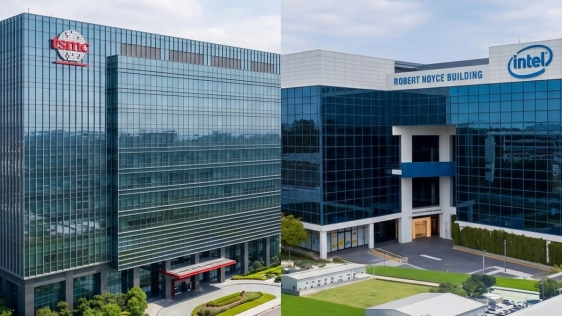
TSMC’s difficulty stitching together AI accelerators with high-bandwidth memory (HBM) on a single chip gives Intel a chance to win foundry customers, according to Counterpoint Research co-founder Neil Shah and other analysts commenting to EE Times.
TSMC’s CoWoS advanced packaging tech, which has been a mainstay for AI customers like Nvidia, AMD, and Broadcom for years, has become a production bottleneck, Shah said in an Aug. 17 report he provided to EE Times.
“HBM’s reliance on TSMC’s CoWoS silicon interposers carries steep costs with thick packages, yield risk, capacity constraints and high scrap costs, thus creating an opening for credible alternatives,” Shah said. Intel’s EMIB advanced packaging that’s in production, as well as the company’s longer-term solutions like Z-angle memory (ZAM) and cross-batch memory (XBM), can help eliminate TSMC’s interposer problem for AI chipmakers, Shah added.
To read the full article, click here
Related Chiplet
- FlexGen Multi-Die Smart Network-on-Chip (NoC) IP
- Ncore Multi-Die Interconnect IP
- Integrated voltage regulator (IVR) chiplet
- High-performance connectivity chiplets
- eFPGA Chiplet
Related News
- Intel details TSMC-made Lunar Lake processor for AI PCs
- Socionext Announces Collaboration with Arm and TSMC on 2nm Multi-Core Leading CPU Chiplet Development
- TSMC looks to standardise chiplet protocols in "world changing" move
- Chiplet Pioneer Eliyan Achieves First Silicon in Record Time with Implementation in TSMC 5nm Process, Confirms Most Efficient Chiplet Interconnect Solution in the Multi-Die Era
Latest News
- OpenLight Adds Former GlobalFoundries Silicon Photonics Leader Kevin Soukup and Semiconductor Veteran Kirk Ouellette to Executive Team
- Marvell to Showcase Industry-First 2nm Optical Technology Demos for AI Data Center Infrastructure at ECOC 2026
- AI Chip Packaging Pushes Beyond Reticle Limits, with CoWoS-L Set to Remain the Mainstream Advanced Packaging Solution Through 2028
- onsemi Introduces the Embedded Power Platform, a Breakthrough Architecture for the AI Era
- GlobalFoundries and Marvell expand collaboration for next-generation optical connectivity