KDPOF, Hinge Technology team on chiplets for optical links
By Nick Flaherty, eeNews Europe ( April 25, 2024)
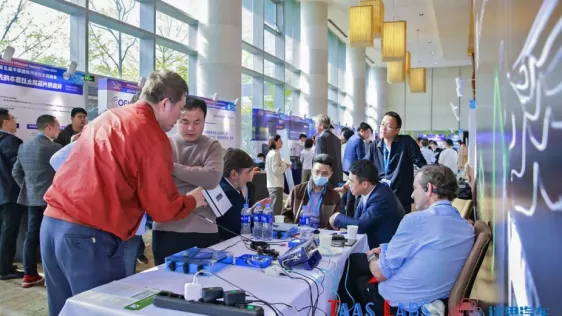
KDPOF in Spain has signed a strategic partnership with Hinge Technology in China to solve key technical issues in the industrial application of chiplets for optical communications in vehicles.
Hinge Technology uses transceivers from KDPOF to design integrated optical modules combined with automotive-grade connectors and optical fibre harnesses to design the electrical electronic architecture (EEA).
The two are jointly researching and developing advanced chip-on-panel (COP) packaging technology using chiplets for low-cost, high-reliability optical processors, optical modules, and complementary optical components tailored for automotive optical communications. This initiative aims to ensure production capacity for various automotive optical communications products.
To read the full article, click here
Related Chiplet
- FlexGen Multi-Die Smart Network-on-Chip (NoC) IP
- Ncore Multi-Die Interconnect IP
- Integrated voltage regulator (IVR) chiplet
- High-performance connectivity chiplets
- eFPGA Chiplet
Related News
- Alphawave Semi at the Forefront of PCIe® 7.0 Specification: Showcasing Next-Gen Chiplet Interoperability and Optical PCIe Technology at PCI-SIG® Developers Conference 2025
- Avicena Demonstrates 30m Reach of microLED-based LightBundle Technology at European Conference on Optical Communications
- PseudolithIC Inc. Raises $6M in Seed Funding to Revolutionize Wireless Chips with Proprietary Chiplet Heterogeneous Integration Technology
- Ayar Labs Unveils World's First UCIe Optical Chiplet for AI Scale-Up Architectures
Latest News
- AI Chip Packaging Pushes Beyond Reticle Limits, with CoWoS-L Set to Remain the Mainstream Advanced Packaging Solution Through 2028
- onsemi Introduces the Embedded Power Platform, a Breakthrough Architecture for the AI Era
- GlobalFoundries and Marvell expand collaboration for next-generation optical connectivity
- NewPhotonics® and Tower Semiconductor Begin High-Volume Shipments of Laser-Integrated, Serviceable Optical Engine PICs for Scale-Out and Scale Up AI Interconnect
- Avicena to Demonstrate World’s First Connectorized microLED Optical Interconnect for AI Infrastructure at ECOC 2026