Chiplets at the Edge: How Modular SoCs Redefine Performance Per Watt
Chiplets and modular SoCs prioritize performance per watt by balancing CPU, accelerators, memory, and I/O while managing data movement, latency, and heat.
By Giordana Francesca Brescia, embedded.com | October 8, 2026
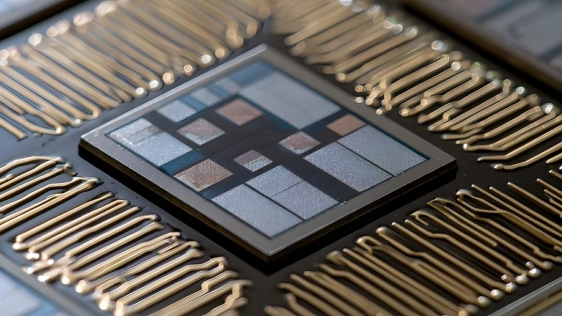 The evolution of edge systems is shifting the focus from computing power alone to how efficiently each watt is transformed into useful performance. Chiplets and modular system-on-chips (SoCs) enable the combination of CPUs, accelerators, memory, and I/O based on specific needs, creating new possibilities for designing more compact, flexible, and efficient platforms.
From silicon scalability to modularity
Traditionally, the increase in performance of embedded systems has been linked to the increasing number of transistors within a single die. The monolithic SoC has been the natural solution to this evolution. CPUs, GPUs, accelerators, memory controllers, communication interfaces, and peripherals are built within the same chip, sharing power, clock, and internal connections.
To read the full article, click here
Related Chiplet
- Optical Chiplet
- Reverse Gearbox Chiplet
- FlexGen Multi-Die Smart Network-on-Chip (NoC) IP
- Ncore Multi-Die Interconnect IP
- Integrated voltage regulator (IVR) chiplet
Related News
- Alphawave Semi to Reveal Ecosystem and Key Architectures Unlocking Generative AI Potential at EE Times' "Chiplets: Building the Future of SoCs" Seminar
- Breaking the Memory Wall: How d-Matrix Is Redefining AI Inference with Chiplets
- Alphawave Semi Highlights Why the Next Generation of AI Advances Demand Chiplet Architectures at EE Times: The Future of Chiplets
- How can in-package optical interconnects enhance chiplet generative AI performance?
Latest News
- ACM Research Announces Shipment of Its First 310 × 310 mm Ultra ECP ap-p Panel-Level Horizontal Electroplating Production Tool
- Entegris Enters Silicon Carbide and Diamond-Enabled Thermal Management Materials Market for AI Advanced Packaging
- Fraunhofer IPMS Showcases New Technologies for the Future of Semiconductor Industry
- Marvell and Lumentum to Combine, Creating a Category Leader in AI Connectivity
- Silicon Austria Labs Adopts PulseForge Photonic Debonding Technology to Accelerate Advanced Packaging and Heterogeneous Integration Research