Scoping out the chiplet-based design flow

Today, the design of most monolithic SoCs follows a familiar pattern. Requirements definition leads to an architectural design. Then, the design team selects and qualifies the necessary IP blocks, assembles them into the architecture, and floorplans the die. Functional verification and early power and timing estimation can begin at this point.
 The team can now begin RTL synthesis, rough placement, and at least preliminary routing. As these tasks finish, most SoC design teams will bring in physical-design specialists to complete the work until signoff.
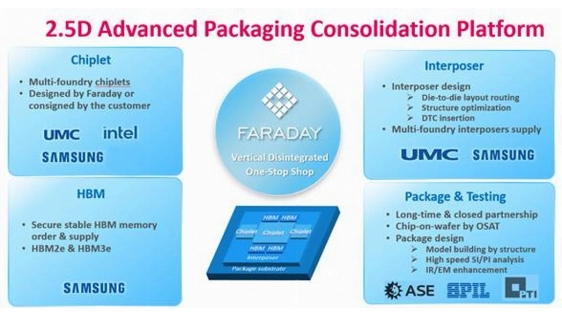
But what about a multi-die design based on chiplets? At first glance, the sequence of tasks seems nearly identical to the one for a monolithic SoC. Just substitute chiplets for IP blocks and interposer design for physical chip design, right?
Well, no. Issues and corresponding tasks in chiplet-based design diverge significantly from the flow of most monolithic chip designs. Unless you intend to build a great deal of specialized multi-die expertise in-house, these issues make it vitally important to engage, from the beginning of the project, with a design partner experienced in both chiplets and interposer design and one with deep relationships across the multi-die, global supply chain.
To read the full article, click here
Related Chiplet
- Optical Chiplet
- Reverse Gearbox Chiplet
- FlexGen Multi-Die Smart Network-on-Chip (NoC) IP
- Ncore Multi-Die Interconnect IP
- Integrated voltage regulator (IVR) chiplet
Related Blogs
- Redefining SoC Design: The Shift to Secure Chiplet-Based Architectures
- Navigating Chiplet-Based Automotive Electronics Design with Advanced Tools and Flows
- Addressing the Colossal Challenge of System Co-Optimization with a Holistic Chiplet Design Methodology
- The Impact of UCIe on Chiplet Design: Lowering Barriers and Driving Innovation