Chiplet-Based FPGAs Optimize Performance for Space Applications
Partitioning compute and I/O simplifies design for greater reliability and flexibility.
By Giordana Francesca Brescia, embedded.com
Field-programmable gate array (FPGA) architectures for space must reconcile computing capacity, reliability, power consumption, and component availability for very long missions. A chiplet-based approach can separate processing and I/O, allowing for the optimization of radiation tolerance, performance, and upgradeability.
Beyond the monolithic FPGA
 Space applications require increasingly higher processing capacities, especially in payloads dedicated to Earth observation, scientific data processing, and high-speed communication systems. The FPGA continues to be considered a particularly interesting platform because it allows developers to implement parallel pipelines, hardware accelerators, and reconfigurable interfaces without resorting to a dedicated application-specific IC.
The increase in complexity, however, introduces an architectural problem that is difficult to ignore. Concentrating all functions in a single die means associating performance, interfaces, and the surface exposed to radiation with the same technological process and the same level of qualification. Reliability and radiation tolerance are specific requirements for FPGAs in space, while long development cycles and component availability make full lifecycle management particularly important.
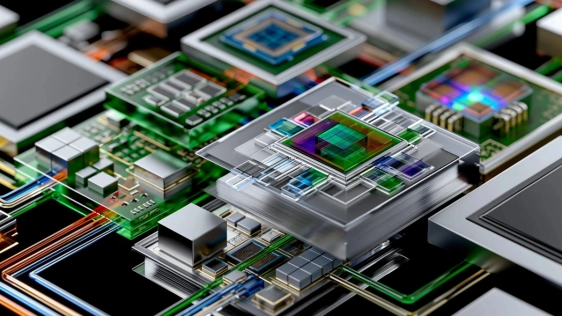
One possible evolution is to adopt a chiplet structure in which the FPGA system is decomposed into multiple specialized dies connected through an advanced package. The goal is not simply to physically divide a monolithic device but to separate functions with different requirements, making the computational logic, memory, interfaces, and service circuits independent, at least in part.
To read the full article, click here
Related Chiplet
- Optical Chiplet
- Reverse Gearbox Chiplet
- FlexGen Multi-Die Smart Network-on-Chip (NoC) IP
- Ncore Multi-Die Interconnect IP
- Integrated voltage regulator (IVR) chiplet
Related News
- JCET Achieves Performance Breakthrough in Glass-Based TGV RF IPDs, Paving the Way for 5G and 6G Applications
- Baden-Württemberg attracts imec to lead development of chiplet-based technology for automotive applications
- TIER IV joins imec’s Automotive Chiplet Program to accelerate chiplet-based architectures and AI accelerators for SDVs
- Onto Innovation’s Dragonfly® G5 System Qualified for Applications in 2.5D AI Packaging
Latest News
- Tenstorrent Releases Open Source Beta of the Open Chiplet Atlas® (OCA) Harness
- Building Out Advanced Packaging Portfolio, JCET Delivers Steady Revenue Growth and Improved Profitability in Q3 YTD 2026
- Egis Group and SiPearl Sign Strategic Cooperation and Investment Agreements to Expand Opportunities on a Global Scale
- Unigen Expands AI Module and Server Compute Collaboration to EdgeCortix RAIDEN Platform
- Amkor Technology and NVIDIA Advance Strategic Partnership for AI Infrastructure