Kandou AI Demonstrates Revolutionary 260 Gbps Tigerwing™ Chip-to-Chip Interface in Silicon at 2026 TSMC Europe Technology Symposium
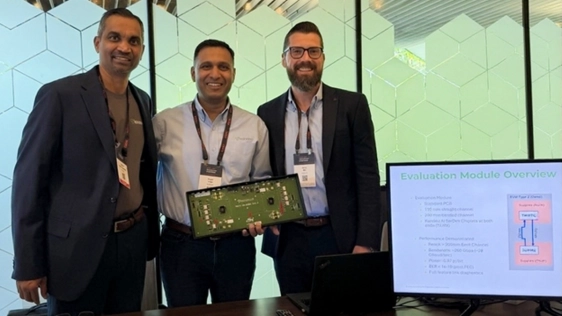
SAINT-SULPICE, SWITZERLAND— June 4, 2026 — Kandou AI, a leading fabless semiconductor company specializing in high-speed, energy-efficient connectivity and system solutions for the AI era, today announced the successful silicon demonstration of its industry-leading Tigerwing™ Chip-to-Chip (C2C) SerDes interface on TSMC’s 4nm technology node. The demonstration took place at the Product Innovation Demos platform during the 2026 TSMC Europe Technology Symposium’s “Innovate with TSMC!” showcase, May 28th, 2026. This breakthrough marks a major milestone in Kandou AI’s mission to solve the critical data movement bottlenecks hampering modern AI infrastructure.
Solving the AI Memory and Interconnect Wall
 As artificial intelligence models grow exponentially, the semiconductor industry faces a fundamental roadblock: GPUs and CPUs must connect to massively expanding memory footprints, turning memory and interconnect bandwidth into severe systemic bottlenecks. The performance of modern AI clusters is no longer limited by raw compute power, but by the speed and efficiency of the data pipelines connecting that compute infrastructure to memory. Traditional networking and interconnect technologies, designed for a pre-AI world, simply cannot keep pace.
Kandou AI’s silicon-proven, revolutionary interconnect technologies are purpose-built to eliminate these exact bottlenecks. By operating at the intersection of information theory and semiconductor design, Kandou AI’s patented signaling and SerDes technologies fundamentally reimagine how data moves across copper infrastructure—delivering breakthrough improvements in bandwidth, reach, and energy efficiency. Unlocking this level of performance from copper allows for the construction of scalable AI systems at a fraction of traditional costs and power consumption, accelerating the global democratization of AI infrastructure.
Turning the Entire PCB into a Large MCM
At the TSMC Symposium, Kandou AI showcased its Tigerwing™ C2C, a groundbreaking SerDes link that delivers long-distance chip-to-chip connectivity across standard PCBs at performance levels previously only achievable via Die-to-Die (D2D) links inside a single package. This advancement is a game-changer for system design, effectively transforming an entire PCB into a massive Multi-Chip Module (MCM). Chiplet design spaces are no longer constrained to a single package; the Tigerwing™ link is engineered to connect two separate chips mounted on two different packages across a PCB distance exceeding 200 mm (see Figure 1).
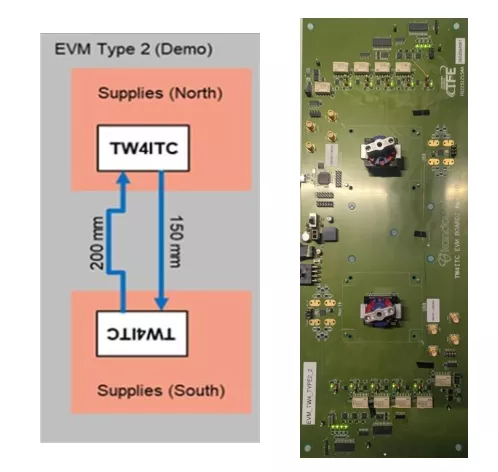
Figure 1. Tigerwing4 Chip-to-Chip evaluation board setup
This architectural shift enables dramatically scaled, lower-cost memory connectivity for advanced AI systems. The live demonstration successfully showcased copper links running at 260 Gbps over a 200 mm reach, achieving an industry-leading power efficiency of < 1pJ/bit at a Bit Error Rate (BER) of < 1E-19 (as shown in Figure 2 and 3).
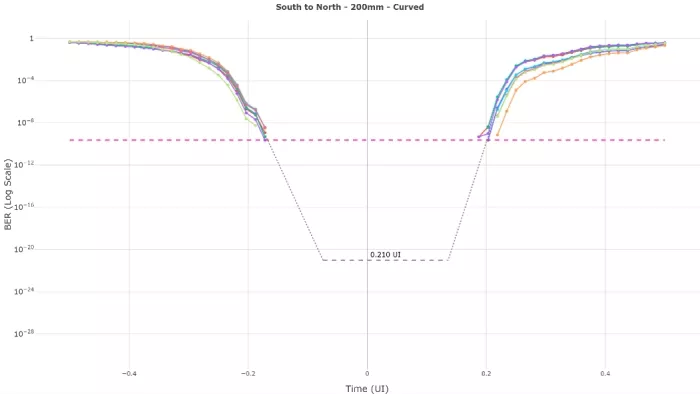
Figure 2. HTUB curves with link performance per subchannel
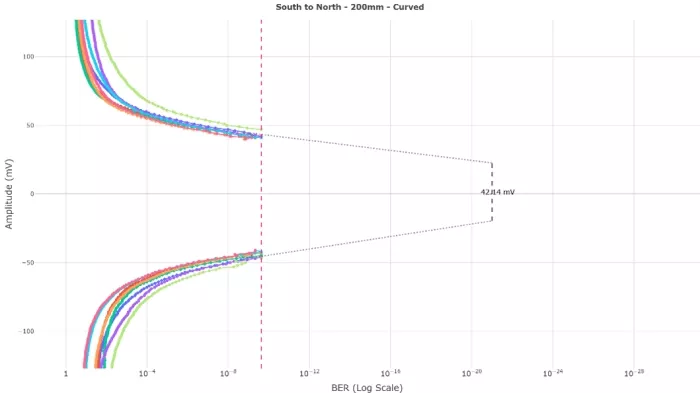
Figure 3. VTUB curves with link performance per subchannel
“This demonstration is a major milestone for Kandou AI as it validates our new, industry-leading high-speed chip-to-chip interconnect technology. With Tigerwing™ technology at the core, we are building transformative AI systems which solve key connectivity and capacity bottlenecks for our AI datacenter customers” said Srujan Linga, Co-Founder and CEO of Kandou AI.
About Kandou AI
Kandou AI is a fabless semiconductor design company dedicated to advancing high-speed, longer reach, low power connectivity solutions. Leveraging its differentiated interconnect IP and system design capabilities, Kandou AI builds high-performance connectivity products for its customers across datacenter infrastructure, AI and consumer electronics with over 20mm silicon units shipped using its technology. Kandou AI is headquartered in Saint-Sulpice, Switzerland, with offices worldwide.
Related Chiplet
- Optical Chiplet
- Reverse Gearbox Chiplet
- FlexGen Multi-Die Smart Network-on-Chip (NoC) IP
- Ncore Multi-Die Interconnect IP
- Integrated voltage regulator (IVR) chiplet
Related News
- Marvell Unveils Industry’s First 64 Gbps/wire Bi-Directional Die-to-Die Interface IP in 2nm to Power Next Generation XPUs
- PowerLattice Raises $25 Million to Break the AI Power Wall
- GlobalFoundries Acquires Advanced Micro Foundry, Accelerating Silicon Photonics Global Leadership and Expanding AI Infrastructure Portfolio
- Chiplet Summit 2026 to Spotlight AI Acceleration and Advanced Packaging
Latest News
- Innolux's Deployment of Key FOPLP Technologies: Leading Next-Gen Advanced Packaging and Seizing AI Opportunities
- Wiwynn, Ayar Labs, and GUC Advance Co-Packaged Optics with Live Demonstration of Integrated Optical Compute System at OCP Global Summit 2026
- ForwardEdge ASIC Announces UCIe 3.0 IP Solution to Accelerate Next-Generation Chiplet-Based ASIC Innovation
- Eliyan Introduces NuLight™: World’s First 2D microVCSEL Interconnect Solution to the Copper Wall
- Evatec delivers first CLUSTERLINE® 310 for Advanced Packaging on small panel formats